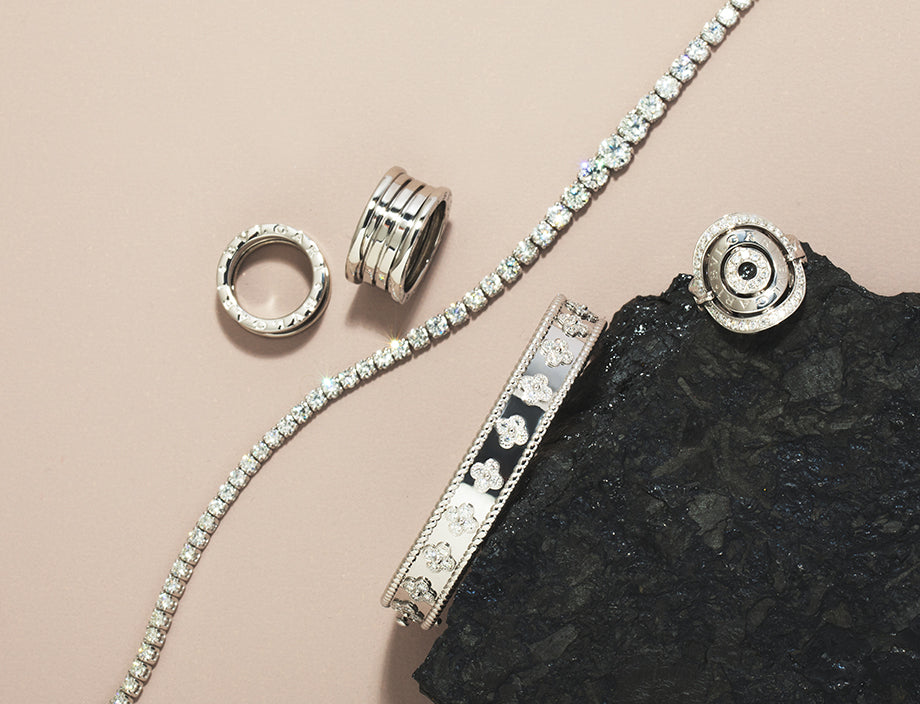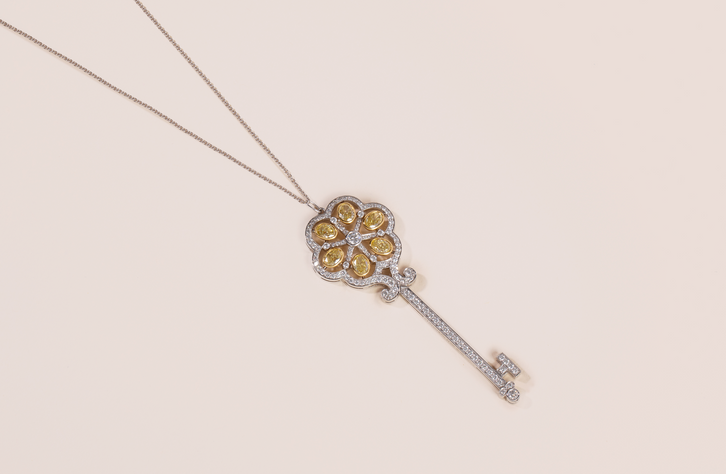
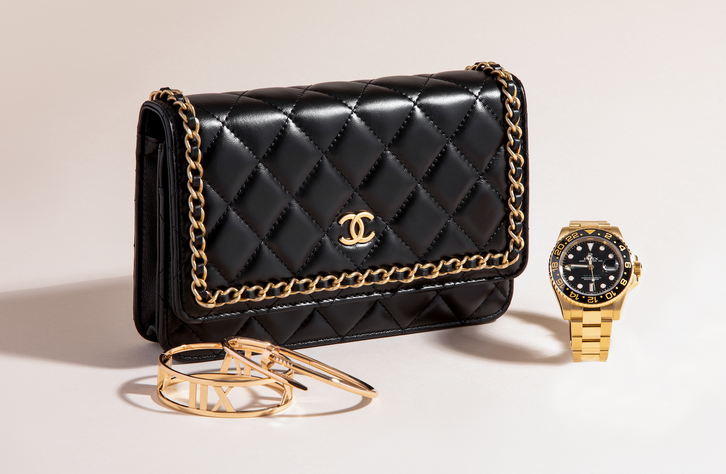
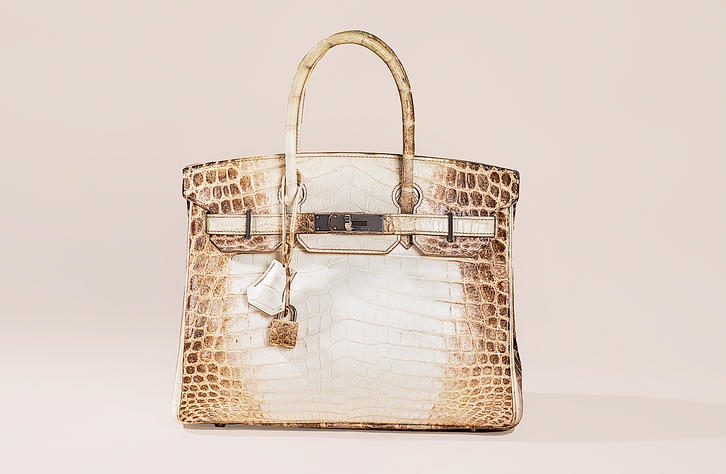



The most affordable ways to buy fine jewelry are: buying pre-owned designer pieces (typically 20-80% below retail), choosing lab-grown diamonds (60-85% cheaper than natural diamonds of the same grade), opting for 14K vs 18K gold, and buying from resale platforms rather than brand boutiques.
Below, we break down each strategy with real price comparisons, plus how to buy safely.
How To Find Affordable Designer Jewelry?
1. Buy Pre-Owned Designer Jewelry (Save 20-80%)
Pre-owned is the single biggest lever for buying luxury jewelry affordably. Unlike new
pieces, which carry full brand markup, authenticated pre-owned jewelry sells at market value, often for a fraction of the boutique price, in like-new condition.
Resale vs retail designer jewelry price examples:
|
Piece |
Est. Retail |
Est. Resale |
Savings |
|
Cartier Yellow Gold Diamond Love Ring |
$4,600 |
$3,400 |
26% |
|
Bvlgari Diva’s Dream Ring |
$3,200 |
$1,100 |
66% |
|
Tiffany & Co. Diamond Metro Eternity Band |
$3,200 |
$1,650 |
48% |
|
Tiffany & Co. True Engagement Ring |
$14,000 |
$7,400 |
47% |
The secondhand luxury market is now worth roughly $58 billion globally and is growing faster than the primary luxury market, meaning more selection and better-graded inventory every year.
2. Choose Lab-Grown Diamonds (60-85% Cheaper)
Lab-grown diamonds are chemically and optically identical to mined diamonds. They have same
hardness, same sparkle, graded by the same GIA/IGI standards. The difference is price: in 2026, a 1-carat natural diamond typically retails for $4,500-$6,500, while a comparable lab-grown stone sells for roughly $500-$1,400.
If your priority is size and brilliance per dollar, lab-grown wins decisively. If your priority is long-term resale value, natural diamonds hold value better. Browse our lab-grown diamond jewelry.

3. Pick 14K Gold Over 18K (Same Look, Lower Price, More Durable)
Gold purity is measured in karats:
|
Karat |
Gold Content |
Best For |
|
14K |
58% gold |
Everyday wear (rich color) |
|
18K |
75% gold |
Fine jewelry standard |
|
22K |
91% gold |
Occasional wear |
|
24K |
100% gold |
Investment pieces (soft) |
With gold trading above $5,000 per troy ounce in early 2026 (up more than 70% year over year), metal content now drives jewelry prices more than ever. Choosing 14K over 18K cuts the gold cost meaningfully and gives you a harder, more scratch-resistant piece.
Sterling silver is the most affordable precious metal option, though it tarnishes and is less durable than gold or platinum.
4. Time Your Purchase Around Price Increases
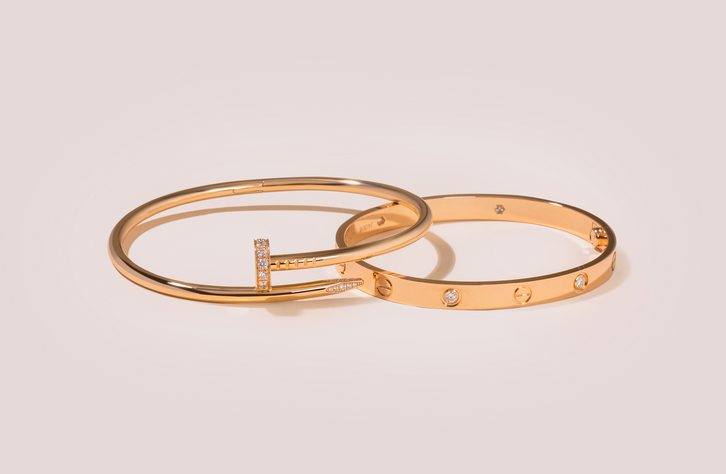
Luxury houses raise prices regularly. Cartier raised US prices 6.9% in mid-2025 and again in December 2025; the classic Love bracelet now retails at $7,950. Retail increases like these don’t apply to pre-owned pieces already on the market, which is why the gap between new and pre-owned keeps widening. Buying pre-owned effectively locks in yesterday’s prices.
Also watch for: post-holiday sales (January), resale platform promotions, and designer jewelry sale sections.

5. Prioritize Cut Over Carat In Diamonds
When evaluating diamonds, jewelers use the 4 Cs, but they don’t affect price equally:
- Cut determines sparkle. An excellent-cut smaller stone outshines a larger poorly cut one. Never compromise here. When in doubt, choose diamond cut vs carat.
- Carat is weight (1 carat = 0.2 g). Buying just under round numbers (0.9 ct instead of 1.0 ct) saves 10-20% with no visible difference.
- Color grades run D (colorless) to Z. Grades G-J look colorless to the naked eye and cost far less than D-F.
- Clarity measures inclusions. VS2–SI1 stones are usually ‘eye-clean’ at a fraction of flawless prices.
6. Consider Vintage And Lesser-Hyped Collections
Vintage pieces and non-flagship collections from major houses (e.g. Tiffany & Co.’s Elsa Peretti line versus its solitaires, or Cartier’s Trinity versus Love) often cost significantly less while carrying the same hallmark and craftsmanship.
Vintage designer jewelry also offers designs no longer in production.
7. Buy Safely: What To Check Before You Pay
Affordable should never mean risky. Before buying pre-owned or discounted jewelry,
Verify:
- Authentication: Buy from sellers with in-house experts and an authenticity guarantee. Every myGemma piece ships with a Certificate of Authenticity.
- Certification: For diamonds over 0.5 ct, ask for a GIA or IGI report.
- Return policy: Check return window (myGemma offers 14 days).
- Hallmarks: Gold should be stamped (585 for 14K, 750 for 18K); brands stamp serial numbers.
- Seller reviews: Check independent platforms like Trustpilot.

Where To Buy Affordable Designer Jewelry
At myGemma, every piece of pre-owned designer jewelry is authenticated by in-house experts and priced up to 80% below retail, with a 14-day return policy and free shipping.
Shop Cartier, Tiffany & Co., Van Cleef & Arpels, Bvlgari, and David Yurman, or browse jewelry under $1,000.
You can also fund your purchase by selling or trading in jewelry you no longer wear, all in as little as 24 hours.

Frequently Asked Questions
What Is The Cheapest Way To Buy Designer Jewelry?
Buying authenticated pre-owned. Pre-owned designer jewelry typically sells 20–80% below retail because it doesn’t carry the brand’s new-piece markup, and each retail price increase widens the gap further.
Are Lab-Grown Diamonds Really Cheaper Than Natural Diamonds?
Yes. In 2026, lab-grown diamonds cost roughly 60-85% less than natural diamonds of equivalent size and grade. A 1-carat natural diamond retails around $4,500-$6,500, while a comparable lab-grown stone costs roughly $500-$1,400. They are physically and chemically identical; only origin and resale value differ.
Is 14K Or 18K Gold Better Value?
14K gold costs less (58% gold content vs. 75%) and is harder and more scratch resistant, making it better value for everyday jewelry. 18K has a slightly richer color and is the standard for high jewelry.
Is Pre-Owned Luxury Jewelry Safe To Buy?
Yes, if it’s professionally authenticated. Buy only from sellers with in-house authentication, a certificate of authenticity, a return policy, and strong independent reviews. Avoid peer-to-peer listings without authentication for high-value pieces.
How Much Does A Cartier Love bracelet Cost Pre-owned Vs. New?
The classic Cartier Love bracelet retails at $7,950 new (2026). Authenticated pre-owned examples typically sell for meaningfully less, and unlike new pieces, they aren't affected by Cartier’s regular retail price increases.
Does Pre-Owned Jewelry Hold Its Value?
Established pieces from Cartier, Tiffany & Co., and Van Cleef & Arpels tend to hold value well because demand is durable and retail prices keep rising. Buying pre-owned means someone else already absorbed the initial retail markup.